Scones
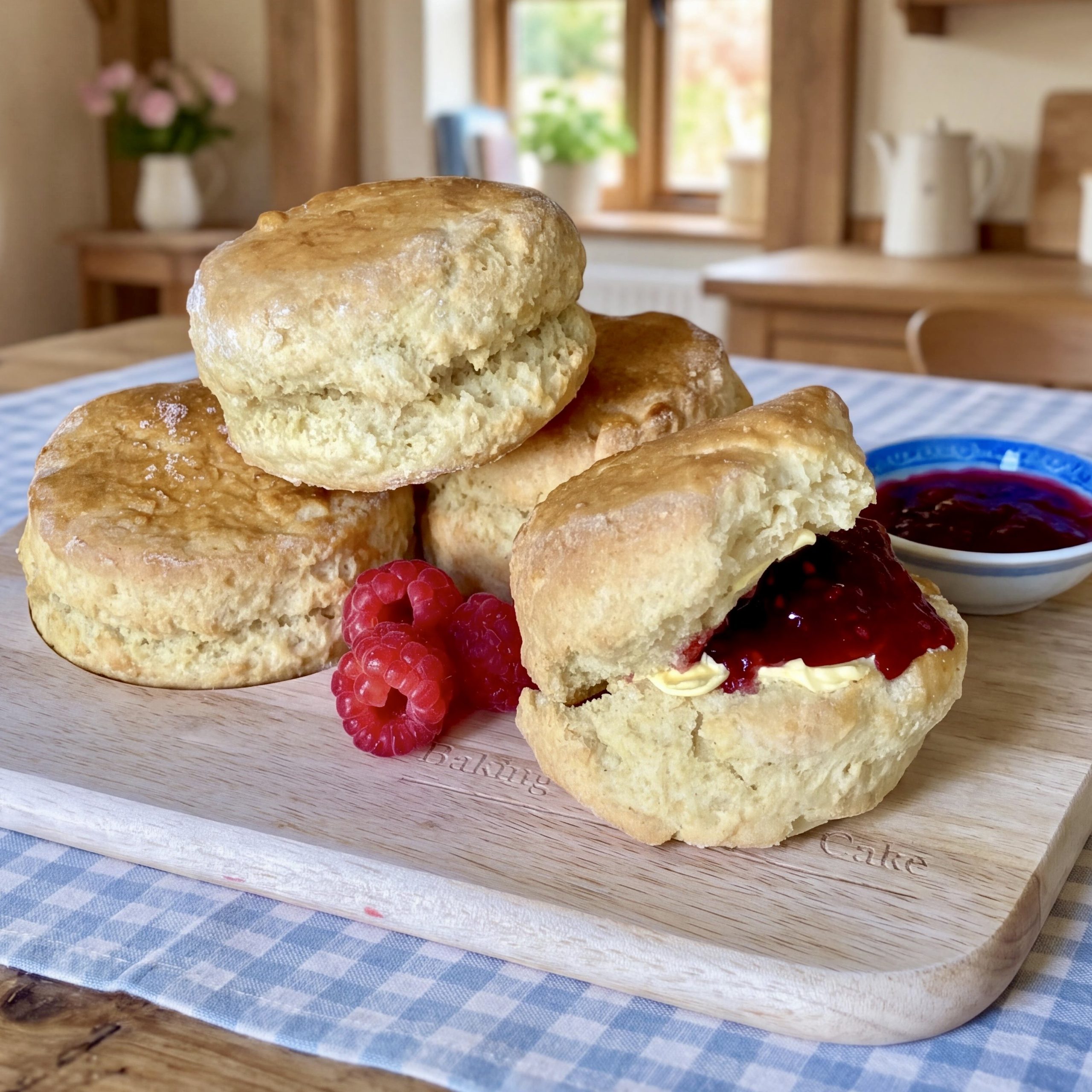
Nothing says afternoon tea more than a quintessential, classic, British scone.
I personally like a scone with structure and a bit of density. Using strong bread flour does this. Whether you are a jam or cream first person, ( I favour the Cornish way of jam first) these scones are definitely worth baking.
Ingredients
250g strong white bread flour
3 teaspoons baking powder
60g softened butter
50g caster sugar
1 large egg beaten
100-125ml full fat milk
Milk to glaze
Method
1. Preheat the oven to 220 degrees Celsius.
2. Line 2 baking trays with parchment paper.
3. Place the flour, baking powder and caster sugar into a large bowl and mix.
4. Add the butter and using your fingertips, rub the butter into the flour until a breadcrumb consistency has been achieved.
5. Beat the egg with 75ml of the milk and then add into the dry mix. Very gently incorporate the milk, using a knife or 2 forks. The idea is to incorporate but not to over mix or beat so that you keep the scones light.
6. Add the remaining milk, a little at a time until you have created a soft dough that has come together. You may not need to add ALL of the milk.
7. Place the dough on a lightly floured surface and using your hands, fold the dough in half. Rotate 90 degrees and repeat the fold. Rotate 90 degrees again and repeat the fold once again.
When you begin, the dough will be a raggedy heap. Don’t be tempted to knead it. This method will create a smoother dough but keep layers and lightness to the texture. DO NOT OVER WORK THE DOUGH.
8. Carefully and lightly roll out the dough to approximately 3cm thickness.
9. Using a cutter, dip it into flour and stamp out the rounds. ( see notes)Place on to the prepared baking trays.
10. Bring together the off cuts and re-roll very gently, then cut out further scones until all the dough has been used.
11. Leave the scones to rest for a few minutes before brushing the tops with a small amount of milk. Take care to not let the milk run down the sides as this will affect the rise. ( see notes)
12. Bake for 12 minutes until golden and well risen.
13. Leave to cool for 5 minutes on the baking tray, then cool completely on a wire cooling rack.
Serve with butter, jam and cream for a delicious tea time treat.
Notes
I use a 6cm metal cutter with straight sides. I push down the cutter and do not twist so that my scones raise evenly during baking.
You can use full fat milk or an egg to glaze but you must only glaze the top of the scone. Glazing gives it colour but if it drips down the sides it will affect an even good rise.
If you prefer a fruity scone, you can add 100g of sultanas at the beginning of stage 7 when you are folding the dough. Sprinkle the fruit across the surface and then fold.
For a lighter, fluffier scone you can swap the strong flour for 250g of self raising flour and use 2 teaspoons of baking powder.